Showing posts with label reference questions. Show all posts

Wednesday, December 14, 2011

Phrasing Reference Questions

Do you ever wonder how to ask a question or phrase it so that you will be understood?  Growing up it terrified me to talk to people on the phone.  I did not know how to say what I needed to say.  Actually, if I pause a moment, it seems that my terror or "deer in the headlights" experiences were mostly involving talking with an adult or asking an adult for something. 

Moments like these were tough, and my mom came to my rescue, prompting me with just the words I would need to supply while holding that rotary phone to my ear.  (I'm not sure when we switched to a cordless phone, but I look back on the rotary phone with fondness and nostalgia.  My dad still has one out in his shop.)

Anyway, Mary W. George serves or functions as the mom/mentor for college students who need to approach the reference desk.  It can be intimidating to approach strangers behind an imposing desk.  Knowing how to phrase some questions or which words to supply in order to obtain the desired result can be quite useful.  In her book The Elements of Library Research: What Every Student Needs to Know, she dedicates two or three pages to this endeavor.


One column contains the title "What You'd Like to Know (and can't figure out on your own)," and the second column reads "Example of How to Ask a Reference Librarian about It (Be ready to explain what you have already tried.)"  Let me provide just a few questions:

-Background information on your general topic
  • Can you recommend a subject encyclopedia that deals with [your topic]?
-Where to identify articles on your topic
  • What database would you suggest for popular and scholarly articles about [your topic]?  Does it include newspaper articles, or is there a different database for those?
-What other sources the library may have related to your topic
  • I have already explored the online catalog and [name of article databases(s)].  What other approaches would you suggest for sources on [my topic]?  Are there relevant materials in special collections or in nonprint formats that the library owns? (118-20)
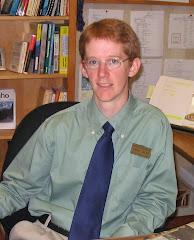
ISU Library Reference Desk
Granted, a good reference librarian ought to be able to ask follow-up questions if a patron does not phrase a question just right (in library speak should we say?), but trying out some of the suggestions George offers might really yield some great results. 

Idaho Health Sciences Library: Reference Desk

Monday, April 25, 2011

The New York Public Library: Desk Reference

We continue to publish a bathroom newsletter. Here are some blurbs I have submitted:

Ever wanted to learn how to compost, build a fire in your fireplace, or understand what should be on a baby-sitter's checklist? Find this information, plus countless other things in The New York Public Library's Desk Reference. Also contains lists of great books, tables of winners/losers of major sporting events, animal highlights of the most popular national wildlife refuges, historical tidbits, and more.

Amazon lists the 4th edition for just $25.00. Sound like a great deal, although it is almost ten years old now.

Or:

Did you know that the Bear Lake National Wildlife Refuge is noted for such wildlife as the white-faced ibis, blue- and black-crowned night heron, snowy egret, Franklin and California gulls? For a list of wildlife refuges see The New York Public Library's Desk Reference (see their travel section), or see the National Wildlife Refuge System.

Wednesday, February 9, 2011

Statistical Abstract: Great for Students Who Need Statistics

In helping a student at the reference desk a few days ago I could not find some statistical information.  He wanted information on cruises, like how many people go each year and how that has changed in the last four years.  I could not find the information he needed, but when I asked a colleague they were able to pinpoint some information rather quickly.  This government documents librarian googled "economic census" +cruise, which returned some good results. 

The Statistical Abstract of the United States added a table on the cruise industry a few years ago, so it shows data from 2003 to 2007.  Sometimes it's good to be reminded of this great resource.  Other sources that might be useful regarding cruises:

Friday, May 8, 2009

Knowing How to Find Information

Information-literacy skills will help individuals recognize when they need information, where they might go for information, how to find it, and how to use it. Today a patron came asking for the salary of department chairs in a California State University. Initially, I thought he was asking for salaries of ISU faculty. (We have two spiral-bound books that list the salaries of all persons working at ISU. By government mandate, all government employees must have their salaries freely available to the public.)

Once I found out he needed salary ranges for engineering chairs in California I went to Google. We found a few results that looked somewhat useful. He asked that I email him a URL, so he could look at it on his own.

After he left I wondered whether or not one of the librarians at this university in California could find the salary ranges that we needed, so I googled the university and found its library. They had a nifty chat-reference service embedded on one of their webpages, which I found to be easy to use. The librarian on the other end thought that this listing of salaries at their institution would be online, but after she/he couldn't find it, they told me they would retrieve the print copy. (When you are waiting for an answer on a chat service, two minutes seems like an eternity. We are spoiled with our quick technology.)

Not too long afterwards, the librarian returned and provided the salary range (they have more than one engineering department, thus they have more than one engineering chair) and a few other bits of information that she/he thought would be useful. Since I had previously emailed the patron, I was able to send along this additional information.

When someone asks for information about a specific institution or locale, it may not hurt to consult a librarian at that institution, or a librarian at the nearest public library.

Wednesday, March 25, 2009

Useful Websites for Beginners, Computer Problems, and & Everyone

As I librarian, I frequently receive library-focused magazines and journals. Like other librarians across the country/world, I am expected to keep up on library trends, research, events, etc. There are several periodicals that get routed in my direction. Ideally, I should look at them promptly to allow my colleagues an opportunity to peruse them as well, though I am not as successful in this department as I ought to be. Anyway, I recently read a little article by Jessamyn West titled "Tips: tech tips for every librarian," published in the March 2009 issue of Computers in Libraries (30-31).

I recommend that librarians look at this article, because it provides some ideas for computer-lab policies, tells about some basic websites to help novice computer users, identifies other sites that can answer questions about websites and computer problems, and introduces personally useful and amusing websites. If you want to browse some of these websites, take a look at some of my recent Delicious bookmarks, particularly the computer and humor bookmarks.

The newer "humor," "funny," and "fun" bookmarks tag websites known as single-serving sites, meaning that these sites typically include just one solitary webpage. Ryan Greenberg explains in better detail than I can what a single-serving site is: http://isthisyourpaperonsingleservingsites.com/. Be forewarned that if you start taking a look at his list of single-serving sites you might fall into a time sink-hole.

For info-lit gurus, West makes known a website that reveals the author of any given website: www.whoistheauthor.com. Knowing who the author of a website is can be rather illuminating, since it helps you begin to understand their level of expertise and bias. Check it out.

Thursday, May 1, 2008

Promoting Information Literacy via Roving Reference

On Monday and Tuesday I decided (with the approval of my supervisor) to try an experiment and do some roving reference in Idaho State University's Rendezvous Building, which was finished just last August. I checked out a laptop from the library's Information Technology department and also took some scotch tape, a stapler, a notepad, a water bottle, and my own planner. Circulation let me take a book truck. My first adventure involved a spill, when my noisy, rattling cart bumped into a protruding slab of concrete and everything but the laptop went flying onto the sidewalk. Gratefully, I had my hand on the laptop. This opportunity for learning prompted me to bring everything in the laptop's suitcase on the second day. I had simply left the suitcase in my office that first day.

Upon entering the Rendezvous I worried that the student at their Information Desk might tell me I couldn't conduct my roving-reference experiment, or that he would
have to seek approval from a supervisor. Fortunately, he had no problem with it; maybe the fact that he hails from my hometown (actually he lived only five houses down the street from me) had something to do with it, but his co-workers had no problem with it the next day, either. So I was good to go.

Basically, I approached individuals with a basic introduction that went something like this: "Hi, I am a Roving Reference Librarian, and today I am answering questions. Are there any questions I can help you with?" Most people responded that they did not, so I would usually go into another line of questioning or public relations for the library. "Do you use the library?" "How do you use the library?" Depending on their responses I varied what I would say.

In a sense, it felt like I was pestering people, but most individuals had the decency to give me at least a minute’s worth of their attention. Yet, I feel strongly that the library can be a significant key to a student's success. I've heard the president of ISU say in a meeting I attended that those students who use the library and its resources are more likely to succeed and graduate. Therefore, whenever I encountered a senior nearing graduation (this week), and they said they had spent many hours studying in the library or had used many of the books/articles I would congratulate them and say that they are proof of this idea.

Here are a few of the questions people asked me:

• My professor ordered some articles for me via Inter-Library Loan. How can I request items through ILL for myself?
• How many books can I check out at a time?
• I need to find out if bacteria grows faster in cow or soy milk. Where can I look to find articles that may address this? This was a difficult one for me; I’m not very satisfied with how I approached this one.
• What is the circumference of the earth? Yes, this guy was being facetious and light hearted, but we had fun finding the answer in the Oxford Reference Online database, albeit in terms of kilometers and not in miles. By the way, the earth’s circumference is wider around the equator than around the poles, longitudinally that is.
• If I check out books now, how long can I have them? I told them that they would be due at the end of the semester, but they could renew them online to extend the loan period.

I think I answered nearly 10 questions in the approximately two and a half hours I was over there. Interestingly enough, I recognized a few student faces as they had been in a recent instruction session I had taught. Their class was meeting about the time I was over there.

For those students who did not have questions, I asked if they ever used the library and what they used it for. I put in a plug for continuing to use the library and to come ask us questions whenever they have them.

Additionally, I met a couple of instructors, and one of them belongs to the economics department. He talked to me briefly about an assignment that he gives his students, and I requested that he send me a copy of it. He has graciously done so, and he gave me permission to share it with my library colleagues. I forwarded it to my colleague who develops our economics's collection.

On my second day fewer persons asked me questions. It could very well be due to my pre-conceived idea that few would have them. When mentioning this to colleagues, they suggested that in such circumstances it might be better to ask open-ended questions like "How is your research going?" Definitely, this roving-reference activity would probably be better during the middle of the semester or at least a couple of weeks before the end of the semester--not the last week.

Anyway, I received lots of valuable feedback on the second day. When I found out one student was majoring in political science I asked her if she had found everything she had needed in the library for all of her projects. In a recent assignment she had not found much on the organizational styles of the US presidency. Apparently, her textbook lists six or seven different styles, and she remembered four or five: collegial, spokes of the wheel, competitive, hierarchical, etc. The following day I noticed that approximately $93 remained in the political-science budget, so I looked for similar types of books in our catalog. We have 29 items that qualify for the search: "presiden? styl?" One of the best subject heading turned out to be "Political Leadership--United States," for which there are 34 titles in our catalog. When conducting similar searches within the University of Iowa's catalog, I discovered a few good titles that seemed to match what this student was looking for, so I ordered a few other titles related to this topic.

Two students had similar ideas, expressing interest in receiving specific information from the library. One suggested that we send a mass email to students, so they can keep abreast of any changes to the library. Later a colleague told me that with an RSS feed, students can receive notice in their emails when the "Library News" gets updated. At the very bottom of the blog is a little link that allows you to receive these updates. The second student remarked that he would appreciate seeing the usage statistics that number how many books have been checked out and how many times people search and find articles in the electronic databases. Again, later I found out the on the "Library News" they post the library newsletters which do include this useful data.

Roving reference turned out to be rather productive and beneficial in my opinion. I hope we pick this up as a regular practice in the future.

Tuesday, November 6, 2007

How do you know if it's a scholarly journal?

Have you ever had this question? At Idaho State University a particular Biology 101 class is required to do several assignments to familiarize themselves with library resources. One of the questions asks that they find a peer-reviewed journal and make a photocopy of an article from our collection of printed journals or print out a full-text version of an article in a database. We use EBSCOHost interfaces and databases, so it can be easy to tell students just to check the box that says "Scholarly (Peer-Reviewed) Journals" when they begin a search or click on the link that says "Academic Journals" once the computer returns its results.

I am never quite satisfied with that answer, because it seems that students may find a book review within an academic journal, but this would not satisfy the criteria for their assignment. Typically, scholarly journals do not have flashy covers, but when students are working at a computer workstation they cannot see the journal/magazine covers. Scholarly articles generally contain a colon in the title, separating the general topic from its particular focus. Ex: "Eating disorder not otherwise specified in an inpatient unit: the impact of altering the DSM-IV criteria for anorexia and bulimia nervosa."

What should students know when they are looking for scholarly, peer-reviewed journals? The Idaho State University reference and instruction librarians have developed a web page that walks students through the decision-making process and compares the scholarly right next to the popular. It can be a great start for students who are puzzled about the matter.

On the other hand, if they want to know right now [post haste] it might be best to point them to Ulrichsweb.com where they can find a quick answer. I conducted a quick search a few minutes ago on "anorexia nervosa." It returned thousands of results; I had not specified any limitations on the search, but I found a journal title to check, Philosophy, Psychiatry & Psychology. I quickly copied and pasted it into the Ulrichsweb.com search box, pressed enter, and it returned lots of options. Of course, this scared me at first. "Oh no, I don't know how to do this. I didn't do it right." However, on looking more closely at the results I found the desired title down low on the list. I don't know why it returned those other results, but once I selected the proper title it took me to a detailed record of the serial in question. One of the fields is titled "Refereed" and for this particular serial it say "Yes." I tried Ulrichsweb.com today for the first time; for some reason I thought that I would have to consult the paper version. Talk about scary--using a printed index!!! No worries, though, because the Head of Reference says Ulrichs will no longer be selling the print version; it will all be online. Sounds like good news for students, professors, and librarians.

Hopefully I can remember to point students to the Ulrichsweb.com site in the future. We do subscribe to it. We have it on our list of databases at least. That's what I have to say about knowing whether or not a source is scholarly or not--at least today. Perhaps someone, someday will comment on this blog. What do I need to do to get people to read my stuff? I believe my entries contain useful information and questions; one reason I think they will be useful down the road is that I should be able to include them in my portfolio for evaluation. This may or may not be true, but I consider it to be a teaching log to include in my personal teaching portfolio at least.


This blog really does prepare me to answer students' questions. It affords me the opportunity to articulate my ideas in words that can then be expressed later. Sometimes I do rather well communicating ideas on the spur of the moment, but other times I fail miserably. My level of effectiveness increases when I first write down/type my ideas, because it forces me to organize my ideas into words that make sense in an understandable pattern/order.

Wednesday, July 25, 2007

Reference on the Telephone vs Face-to-Face

Today was only my second time at the Reference Desk by myself. I'm glad that I get to start in the summer when fewer students and faculty are around. I get time to study the library's catalog, database access points, university web pages, etc. One patron today asked about using the computers, and I felt good about knowing the answers. She can use certain computers designated for community users after she gets a login code from the Circulation Desk. This same patron came back asking for help in sending off an email, so I walked with her to the computer and found that she had not opened any email application. Initially, this baffled me a bit, but I was able to open another browser tab so she could type in MSN.com and access her hotmail account. I need to remember that everyone comes with varying computer skills and knowledge. It does make me curious. Did she think that she could email a document straight from the desktop? That's what it appeared to me. Perhaps she thought she could not access her email on our computers or something. She had a jump drive, and the document she wanted to send came from there. I did think to ask if she knew how to send an attachment, and she said she did. Later she passed by the desk and I verified that all worked out well for her.

Two individuals called on the phone to ask questions. Both serve as assistant professors on campus. The first asked about citing a journal article using the APA citation style. I looked to verify that we didn't have it in our databases, and we did not. I told her I would consult with my colleague and call her back. My colleague had me look again in the A-Z list. If we could see how the database cited the information then that might give us clues as to how to suggest she cite it. No such luck. We looked in the APA Manual in section 4.11, which said that if no volume exists then they can cite month, season, and something else. The professor's dilemma was that she did not know how to cite an article wherein the cover indicated it to be the Winter 2004-2004 issue. She needed to know the exact year. My colleague and I believe that the citation should appear just as it is printed on the cover. We found an example to support us, but this was after I had called back the professor. Our web site links out to several citation guides elsewhere that provide many examples.

It's challenging to understand and communicate with individuals over the phone; it's hard to really know what they need. When I called the instructor back, she wanted me to tell her what should be done. When I gave her my opinion she said that was not acceptable. This made me a bit defensive, but I remembered what my colleague had said, that she could call the Writing Center who had more experience helping people with citation questions. Now that I think of it, I think I will email the professor and make her aware of the citation examples on the web that we have. Here's a link to that page of citation links: http://www.isu.edu/library/help/citations.htm.

The second phone call came just before I was about to close up for the day. He had received a request from someone for a pdf copy of an article he had published 12 years ago. Our library did not have a digital copy of that journal article, so I suggested he try Inter-Library Loan. Hopefully, this will help him gain access to a pdf version.

What are the best ways to help people on the telephone? I still prefer face-to-face interactions. With the first reference transaction described above I felt like I had helped the person. She needed to print the document out, and I was able to use a guest login so she could do that. Her non-verbal cues/smiles indicated that her needs had been met. Telephone interviews can be more tricky, and I have definite room to grow in order to better serve those who call in for help on the phone.